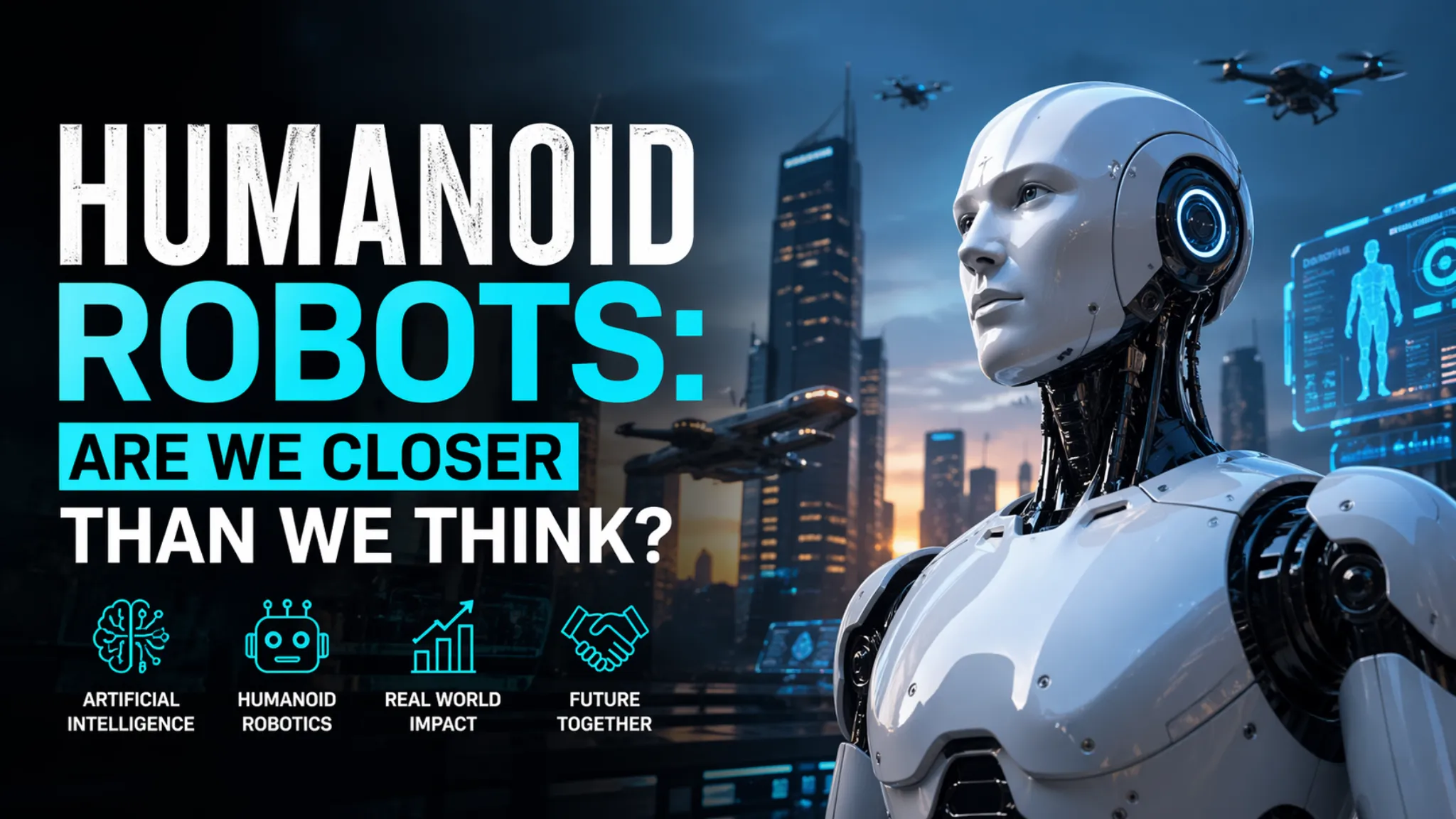
Humanoid Robots: Are We Closer Than We Think?
By Convertixy Editorial Team
Introduction
For many years, humanoid robots were just a part of science fiction. We saw them in movies, books, and futuristic ideas, but not in real life. Today, things are changing fast. Big companies and research labs are building robots that can walk, talk, and even assist humans in daily tasks.
This brings a simple but powerful question. Are we really close to a world where humanoid robots live and work with us?
The answer is not a simple yes or no. We are closer than before, but there are still challenges. In this blog, we will explore how far we have come, what is already possible, and what is still missing.
What Are Humanoid Robots?
Humanoid robots are machines designed to look and act like humans. They usually have:
- A head, torso, arms, and legs
- The ability to walk or move in a human-like way
- Sensors to see, hear, and understand the environment
- Some level of intelligence to make decisions
The main goal of humanoid robots is simple. They should be able to work in environments made for humans without needing major changes.
Why Are Companies Building Humanoid Robots?
You might wonder why companies are investing so much in these robots. The reason is not just innovation. It is also about solving real problems.
Here are some key reasons:
- Labor shortage
- Many industries do not have enough workers. Robots can help fill this gap.
- Dangerous jobs
- Some jobs are risky for humans, like working in mines or disaster areas. Robots can handle these safely.
- Repetitive work
- Tasks that are boring and repeated can be done by robots without getting tired.
- 24/7 productivity
- Robots do not need rest, which makes them useful in industries that run all day.
Current Progress in Humanoid Robotics
The progress in recent years has been impressive. We are no longer talking about simple machines. These robots are becoming smarter and more capable.
What robots can do today
- Walk and maintain balance on different surfaces
- Pick up and carry objects
- Recognize faces and voices
- Follow basic instructions
- Work in controlled environments like factories
Some companies are already testing humanoid robots in warehouses and production lines. This is a big step because these environments require precision and safety.
The Role of Artificial Intelligence
Humanoid robots are not just about hardware. Their real power comes from software, especially Artificial Intelligence.
AI helps robots:
- Understand human speech
- Recognize objects and people
- Make decisions based on data
- Learn from past experiences
Without AI, a robot is just a machine. With AI, it becomes something that can interact and adapt.
Real World Use Cases
Humanoid robots are slowly entering real life. They are not everywhere yet, but their presence is growing.
1. Healthcare and Assistance
Robots can help elderly people by:
- Reminding them to take medicine
- Assisting with daily tasks
- Providing companionship
This can be very helpful in countries with aging populations.
2. Warehouses and Logistics
In large warehouses, robots can:
- Move items from one place to another
- Assist human workers
- Reduce physical strain
3. Customer Service
Some robots are used in:
- Hotels
- Airports
- Shopping centers
They can guide people, answer simple questions, and improve customer experience.
Challenges That Still Exist
Even though progress is strong, we are not fully there yet. There are still many challenges.
1. High Cost
Humanoid robots are expensive to build and maintain. This makes it hard for small businesses to use them.
2. Energy Consumption
These robots need a lot of power. Battery life is still a big limitation.
3. Complex Movement
Walking like a human is harder than it looks. Balance and coordination are still being improved.
4. Safety Concerns
Robots working around humans must be very safe. Even a small mistake can cause problems.
5. Limited Intelligence
AI is powerful, but it is not perfect. Robots still struggle with complex decisions and unpredictable situations.
Are We Close to Everyday Robots?
This is the big question.
The truth is, we are in the transition phase. Humanoid robots are moving from labs to real-world testing. They are not yet common in homes, but they are getting closer.
What we can expect in the near future
- Robots in factories and warehouses will become normal
- More robots will assist in healthcare
- Prices may slowly decrease as technology improves
What may take more time
- Fully independent robots at home
- Robots that think and behave exactly like humans
- Mass adoption in everyday life
The Future of Humanoid Robots
The future looks exciting. As technology improves, humanoid robots will become more useful and more common.
Some possible future scenarios:
- Robots helping in homes like personal assistants
- Human and robot teams working together
- Robots handling emergency situations
- Smarter AI making better decisions
We may not reach a fully robotic world soon, but the direction is clear.
Final Thoughts
Humanoid robots are no longer just a dream. They are becoming real, step by step. The progress we see today would have seemed impossible just a few years ago.
At the same time, it is important to stay realistic. We are close, but not fully there yet. Challenges like cost, safety, and intelligence still need to be solved.
If development continues at this pace, the next decade could bring major changes. Humanoid robots might not replace humans, but they will definitely work alongside us.
And when that happens, the way we live and work will change in ways we are just starting to imagine.