The Dark Side of AI Nobody is Talking About
By Convertixy Editorial Team
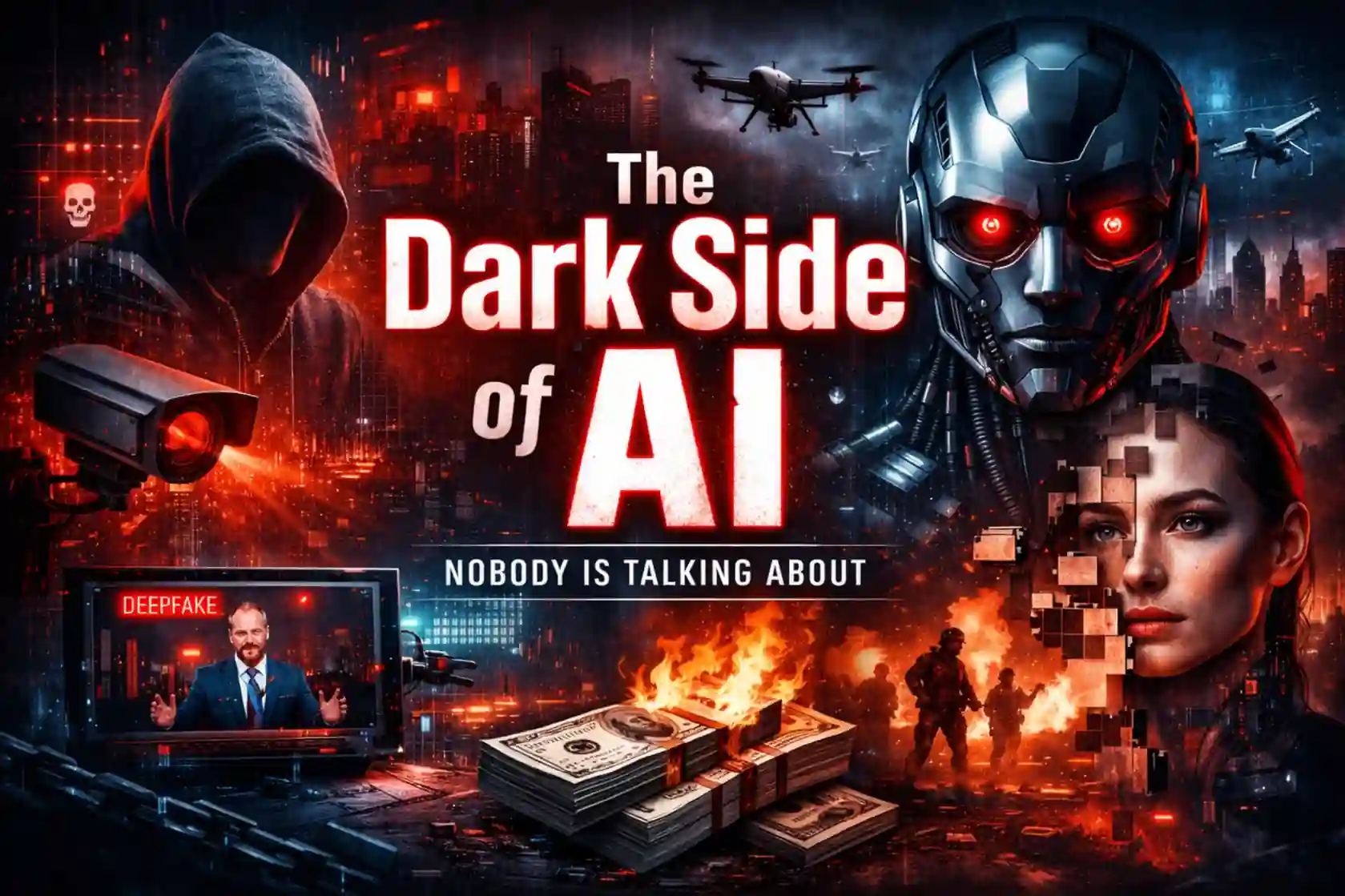
Artificial Intelligence is everywhere today. From chatbots to recommendation systems, from smart assistants to automated tools, AI is becoming a part of our daily life. Most people talk about how useful AI is. They say it saves time, increases productivity, and makes life easier.
But there is another side of AI that many people do not talk about. This is the dark side. It includes risks, misuse, and long term problems that can affect individuals, businesses, and even entire societies.
In this blog, we will explore the hidden dangers of AI in a simple and clear way. Each topic will be explained deeply so you understand not just what is happening, but why it matters.
What is the Dark Side of AI
The dark side of AI refers to the negative impact and risks associated with artificial intelligence. These risks can be unintentional or intentional.
Unintentional risks happen when AI systems make mistakes or behave in unexpected ways. Intentional risks happen when people use AI for harmful purposes.
Some examples include:
- AI used for hacking
- Fake videos that look real
- Loss of jobs due to automation
- Privacy invasion through surveillance
- Biased decision making systems
The problem is not AI itself. The real issue is how it is designed, trained, and used.
AI in Cyber Attacks and Hacking
One of the most serious dangers of AI is its use in cyber attacks.
In the past, hacking required deep technical knowledge. Today, AI tools can automate many parts of hacking. This means even beginners can perform advanced attacks.
How AI is used in hacking
- AI can scan systems for vulnerabilities much faster than humans
- It can automatically test thousands of attack methods
- It can generate phishing emails that look very real
- It can break passwords using smart guessing techniques
Real impact
Imagine receiving an email that looks exactly like it came from your bank. The language is perfect. The logo is correct. The message feels urgent. This is not written by a human. It can be generated by AI.
Many people fall into this trap because it looks authentic.
Why this is dangerous
- Attacks become faster and more frequent
- Even small hackers become powerful
- Security teams struggle to keep up
AI is creating a situation where defense is becoming harder than attack.
Deepfakes and Fake Content
Deepfake technology is one of the most dangerous uses of AI.
Deepfakes are fake videos, images, or audio created using AI. They look very real and are often impossible to detect with the naked eye.
How deepfakes work
AI models are trained on large datasets of images or voice samples. They learn how a person looks and sounds. Then they generate fake content that mimics that person.
Examples
- Fake videos of politicians giving speeches
- Fake audio of someone saying things they never said
- Fake celebrity videos used for scams
Real world danger
- Misinformation spreads quickly
- People lose trust in real content
- Reputation of individuals can be destroyed
Imagine a fake video of a public figure going viral. Even if it is proven fake later, the damage is already done.
Why it matters
Deepfakes can be used for:
- Blackmail
- Political manipulation
- Financial fraud
This is a serious threat to truth and trust in the digital world.
AI and Loss of Privacy
AI systems rely on data. A lot of data.
Every time you use an app, browse a website, or interact online, data is being collected. AI uses this data to learn about you.
What kind of data is collected
- Location
- Search history
- Messages and interactions
- Purchase behavior
How AI uses this data
- To recommend content
- To show ads
- To predict your behavior
The hidden problem
Many companies collect more data than needed. This creates privacy risks.
In some cases, governments and organizations use AI for surveillance. Cameras with AI can track people, recognize faces, and monitor movements.
Real concerns
- People are being watched without consent
- Personal data can be leaked or misused
- Freedom of expression can be affected
When people know they are being monitored, they may change their behavior. This is dangerous for a free society.
Bias and Unfair Decisions
AI is often seen as neutral and objective. But this is not always true.
AI learns from data. If the data is biased, the AI will also be biased.
Examples of bias
- Hiring systems that prefer certain groups
- Loan approval systems that discriminate
- Facial recognition that works poorly for some people
Why this happens
AI models are trained on historical data. If past decisions were unfair, the AI learns the same patterns.
Impact
- People can be treated unfairly
- Opportunities can be lost
- Trust in technology decreases
Important point
Bias in AI is not always intentional. But the impact is real and serious.
Job Loss and Automation
AI is changing the job market.
Many tasks that were done by humans are now automated using AI.
Jobs at risk
- Data entry
- Customer support
- Basic content writing
- Manufacturing tasks
Why companies use AI
- It reduces cost
- It works faster
- It can run 24 hours
The problem
While AI creates new jobs, it also removes many existing ones. Not everyone can easily switch to new roles.
Real impact
- Unemployment in some sectors
- Skill gap in the workforce
- Economic inequality
Important thought
Technology always changes jobs. But the speed of AI development is very fast. Society may not be ready for this shift.
Over Dependence on AI
AI is making life easier. But too much dependence can be dangerous.
Examples
- People rely on AI for answers instead of thinking
- Students use AI tools for assignments
- Businesses depend on AI for decisions
Risks
- Loss of critical thinking skills
- Reduced creativity
- Blind trust in AI outputs
AI is not always correct. It can make mistakes. If people trust it blindly, wrong decisions can happen.
AI Mistakes and Lack of Control
AI systems are not perfect.
Sometimes they make unexpected decisions that even developers do not fully understand.
Why this happens
- Complex algorithms
- Lack of transparency
- Limited testing in real world conditions
Examples
- AI giving wrong medical advice
- Autonomous systems making unsafe decisions
- Chatbots spreading incorrect information
The challenge
When AI makes a mistake, it is not always clear who is responsible.
- The developer
- The company
- The user
This creates legal and ethical problems.
AI in Warfare and Dangerous Applications
AI is also being used in military systems.
Examples
- Autonomous weapons
- Drone systems
- Surveillance tools
Why this is risky
- Machines making life and death decisions
- Reduced human control
- Possibility of misuse
If AI systems are used in war, the consequences can be very serious.
There is also a risk of these technologies falling into the wrong hands.
Data Manipulation and Information Control
AI can control what people see online.
How it works
- Algorithms decide what content you see
- Personalized feeds show specific information
The problem
- People may only see one side of a story
- Opinions can be influenced
- False information can spread faster
Real impact
This can affect:
- Elections
- Public opinion
- Social stability
AI can shape reality for millions of people without them realizing it.
Can We Control the Dark Side of AI
The situation is serious, but not hopeless.
There are ways to reduce the risks of AI.
Steps that can help
- Strong regulations and laws
- Ethical AI development
- Better security systems
- Public awareness and education
Role of developers
Developers should:
- Build transparent systems
- Test for bias
- Focus on safety
Role of users
Users should:
- Stay informed
- Verify information
- Avoid blind trust
AI is a powerful tool. Like any tool, it depends on how it is used.
Final Thoughts
AI is one of the most powerful technologies ever created. It has the ability to solve major problems and improve lives.
But it also comes with serious risks.
The dark side of AI includes cyber attacks, fake content, privacy loss, bias, job disruption, and more. These issues are not just technical problems. They affect society, economy, and human behavior.
The goal is not to stop AI. The goal is to use it responsibly.
If we ignore the risks, the consequences can be serious. But if we understand them and act wisely, we can build a future where AI helps humanity instead of harming it.