Is AI Secretly Destroying the Environment? The Shocking Truth About Sustainable AI
By Convertixy Editorial Team
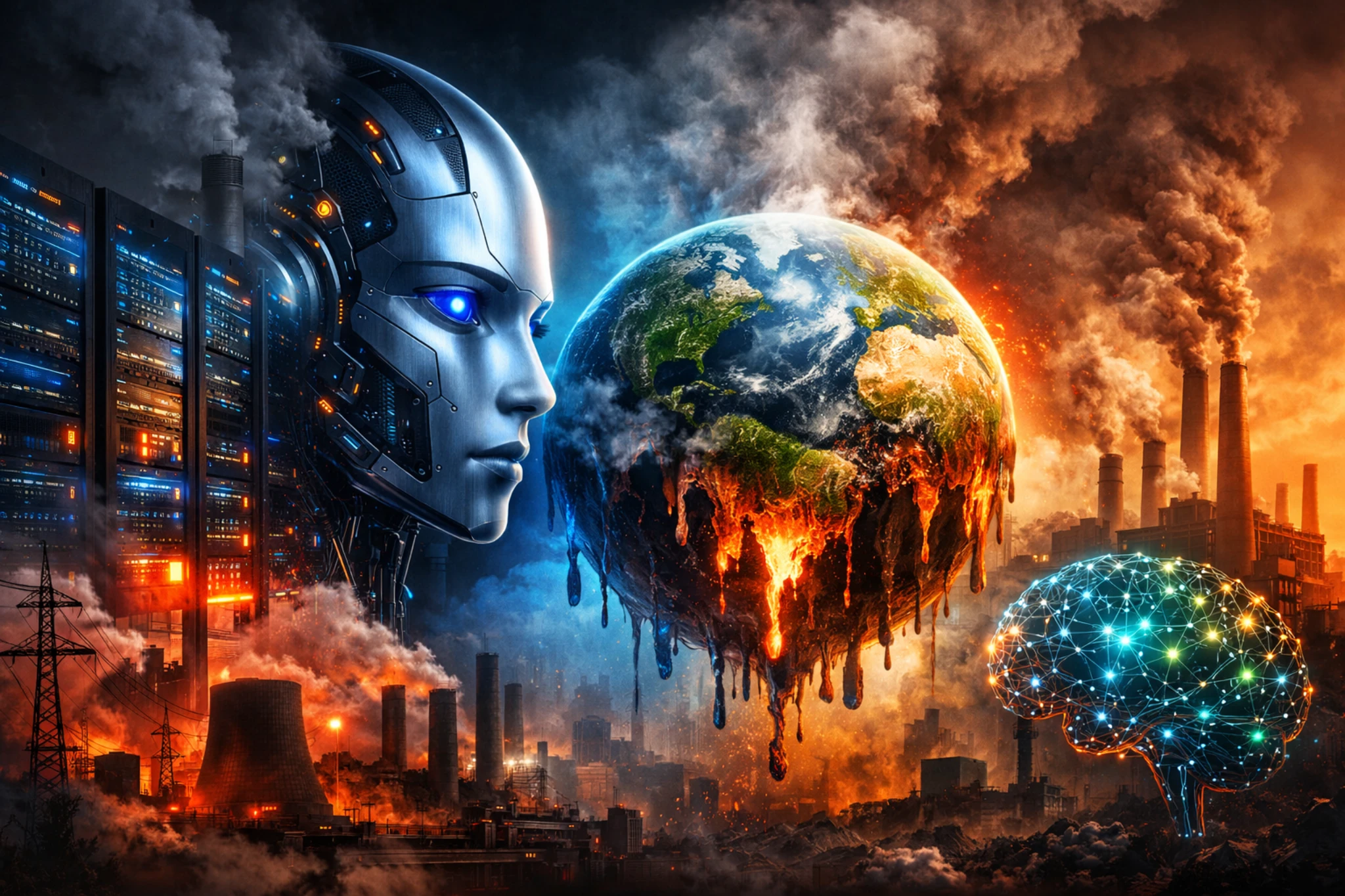
Introduction
Let’s be honest for a second.
We all love AI.
Whether it is generating images, writing content, or answering questions instantly, AI feels like magic. You type something, and boom, you get results in seconds. No waiting, no effort.
But here is something most people never think about.
What actually happens when you click that “generate” button?
It is not just your laptop doing the work. Your request travels across the internet to massive data centers filled with powerful machines working non stop.
And those machines are not running for free.
They consume energy. A lot of it.
So here is the real question.
Is AI quietly damaging the environment while making our lives easier?
Let’s break it down in a simple and honest way.
What is Sustainable AI, Really?
You might have heard the term “sustainable AI” recently. It sounds technical, but the idea is actually very simple.
It means building and using AI in a way that does not harm the environment.
That includes things like:
- Using less electricity
- Reducing pollution
- Making systems more efficient
Basically, AI should help us without creating a bigger problem in the background.
But right now, that balance is not perfect.
The Part No One Talks About
When you search something on Google, it takes very little energy.
But when you use AI, it is a completely different story.
AI models are huge. We are talking about systems trained on massive amounts of data using extremely powerful hardware.
Behind every AI tool, there are data centers running day and night. These are not small rooms with a few computers. These are massive facilities filled with servers, cooling systems, and backup power.
And all of that needs electricity.
Now imagine millions of people using AI at the same time.
You can probably guess what that means.
Why AI Needs So Much Power
Let’s keep this simple.
AI uses more energy mainly because of three reasons.
1. The Size of AI Models
Modern AI systems are insanely large. They are designed to understand language, images, videos, and even human behavior.
More complexity means more calculations. More calculations means more power usage.
2. Training the Model
Before an AI tool is released, it goes through a training phase.
This training can take days or even weeks using high performance machines. During this time, huge amounts of electricity are consumed.
Think of it like teaching a brain by making it read the entire internet again and again.
3. Continuous Usage
AI is not used once and turned off.
It is being used 24 hours a day by people around the world. That means servers are always active, always processing, always consuming energy.
So, Is AI Actually Harmful?
This is where things get interesting.
The answer is not a simple yes or no.
On one side, AI does have a real environmental cost.
Data centers often rely on electricity that comes from fossil fuels. That leads to carbon emissions, which contribute to climate change.
Also, these systems need cooling, and some cooling methods use large amounts of water.
And then there is hardware. Old servers and GPUs become waste over time.
So yes, there is an impact.
But that is not the full story.
The Other Side of AI
Here is something most people ignore.
AI is also helping solve environmental problems.
For example:
- AI is being used to optimize energy usage in buildings
- It helps improve renewable energy systems
- It can predict weather patterns and climate changes
- It reduces waste in industries by improving efficiency
So while AI creates problems, it also helps fix them.
That is why this topic is not black and white.
What Big Tech Companies Are Doing
Big companies are not ignoring this issue.
They know that if AI keeps growing without control, it will create serious environmental challenges.
That is why many companies are now focusing on making AI more sustainable.
Some are switching to renewable energy like solar and wind.
Others are trying to build smaller and more efficient AI models.
There is also a lot of work happening around better cooling systems that use less water and energy.
It is not perfect yet, but progress is happening.
Can AI Become Sustainable?
Honestly, yes.
But it will not happen automatically.
It requires effort from both companies and users.
Developers need to build smarter and lighter AI systems.
Companies need to invest in clean energy.
And users like us need to be more aware of how we use technology.
Because at the end of the day, demand drives everything.
What Can You Do?
You might be thinking, “I am just one person, what difference does it make?”
But small actions matter more than you think.
Here are a few simple things you can do:
- Avoid using AI for unnecessary tasks
- Use it when it actually adds value
- Support platforms that focus on sustainability
- Stay informed
You do not need to stop using AI.
You just need to use it smarter.
The Future We Are Heading Towards
AI is not slowing down.
In fact, it is just getting started.
In the next few years, AI will be part of almost everything we do.
The real challenge is making sure this growth does not come at the cost of our environment.
If done right, AI could actually become one of the biggest tools to fight climate change.
But if ignored, it could become part of the problem.
Final Thoughts
AI is powerful. There is no doubt about that.
But power always comes with responsibility.
Right now, AI is not completely clean. It has an environmental cost that most people do not see.
At the same time, it has the potential to create a better and more efficient world.
So the goal is not to stop AI.
The goal is to make it better.
Next time you use AI, just remember one thing.
That instant answer is not as simple as it looks.
There is an entire system working behind it.
And how we manage that system will decide the future.