Rise of Edge Computing (2026 Guide)
By Convertixy Editorial Team
Introduction
Technology is evolving very quickly, and the way we handle data is also changing. Earlier, most applications depended on cloud computing. Whenever a device generated data, it was sent to a remote server, processed there, and then the result was returned to the device. This method worked well for many years, but it is no longer enough for modern needs.
Today, we are surrounded by smart devices such as mobile phones, smartwatches, security cameras, and IoT sensors. These devices generate a massive amount of data every second. Sending all this data to the cloud creates delays and increases network load. In some cases, even a small delay can cause serious problems, especially in systems that require real time decision making.
This is where edge computing becomes important. It allows data to be processed closer to the device instead of sending it far away. This approach improves speed, reduces delay, and creates a better overall experience for users.
What is Edge Computing?
Edge computing is a method where data is processed near the source instead of being sent to a centralized cloud server. The word “edge” refers to the edge of the network, which is closer to the user or device.
In simple terms, instead of sending data to a distant server, the processing happens on a nearby device or a local server. This makes the system faster and more efficient.
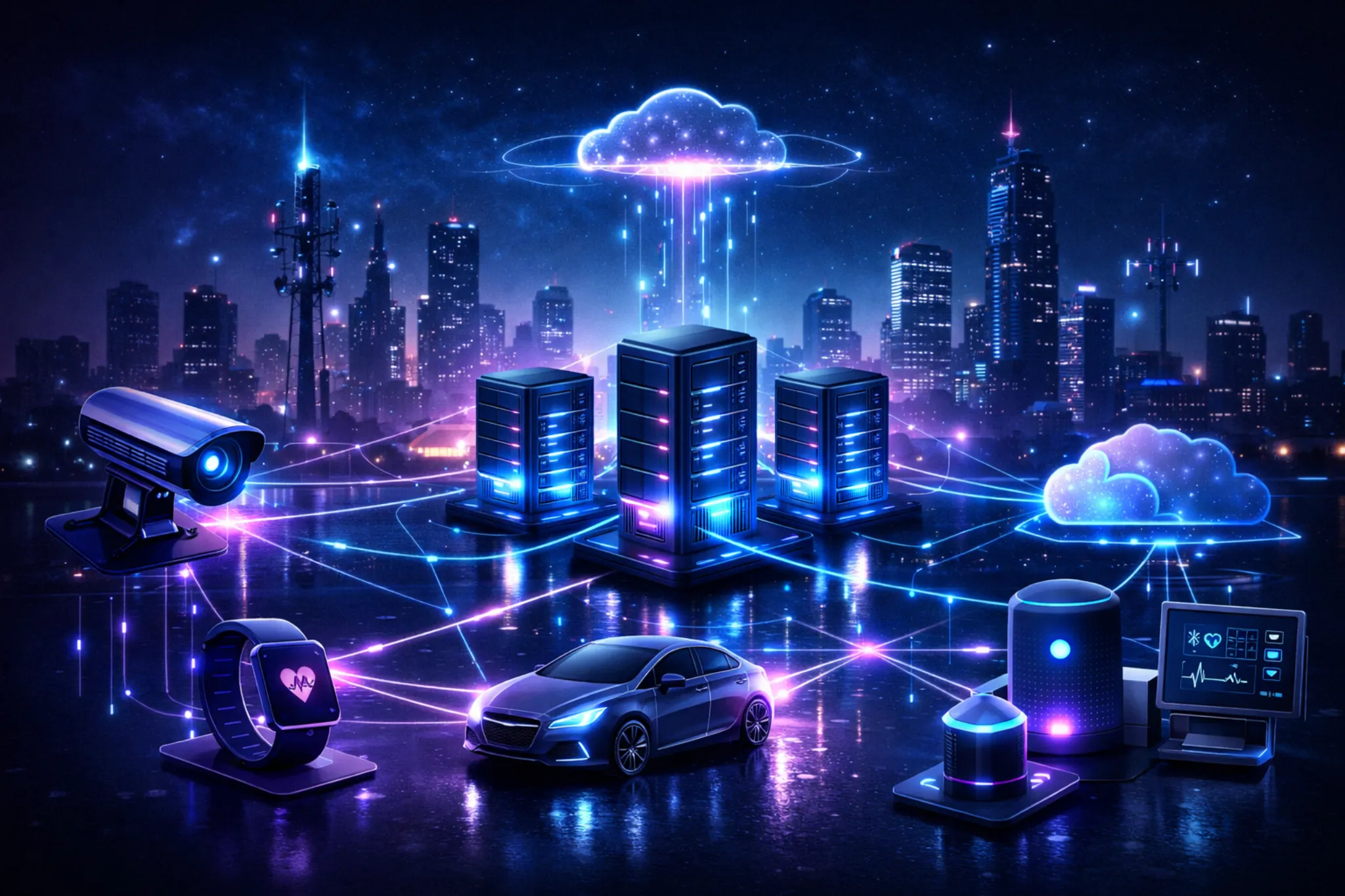
For example, imagine a smart security camera. In a traditional system, the camera records video and sends it to the cloud for analysis. In edge computing, the camera itself can analyze the video and detect unusual activity instantly. This removes delay and makes the system more reliable.
How Edge Computing Works
To understand edge computing better, it is useful to compare it with traditional cloud computing.
In a cloud-based system, a device collects data and sends it over the internet to a remote server. The server processes the data and sends a response back to the device. This process involves multiple steps and depends heavily on internet speed. If the network is slow, the entire system becomes slow.
In edge computing, the process is different. The device collects data and processes it locally or through a nearby edge server. Since the data does not need to travel far, the response is almost instant. This makes edge computing ideal for applications where speed is critical.
Why Edge Computing is Growing in 2026
There are several reasons why edge computing is becoming popular in 2026. One of the biggest reasons is the need for faster response times. Modern applications such as online gaming, virtual reality, and autonomous vehicles require instant processing. Even a small delay can affect performance or safety.
Another major reason is the rapid growth of IoT devices. Millions of devices are connected to the internet, and each one generates data continuously. Sending all this data to the cloud is not practical. Edge computing reduces the load by handling data locally.
Privacy is also an important factor. When data is processed locally, it does not need to travel across multiple networks. This reduces the risk of data breaches and improves security.
Cost is another reason for its growth. By reducing the amount of data sent to the cloud, companies can save on bandwidth and storage costs. This makes edge computing a cost effective solution for many businesses.
Edge Computing vs Cloud Computing
Edge computing and cloud computing are not competitors but complementary technologies. However, they have clear differences.
In edge computing, data is processed close to the source. This results in faster response times and lower latency. It also reduces dependency on a strong internet connection.
In cloud computing, data is processed in centralized servers that may be located far from the user. This can introduce delays, especially when large amounts of data are involved.
While cloud computing is still useful for large scale data storage and complex processing, edge computing is better suited for real time applications.
Real Life Examples of Edge Computing
Edge computing is already being used in many real world applications. One of the most common examples is self driving cars. These vehicles use sensors to collect data about their surroundings. They must process this data instantly to make decisions such as braking or turning. Sending this data to the cloud would cause delays, so edge computing is used.
In healthcare, smart devices monitor patient health in real time. For example, wearable devices can track heart rate and detect abnormalities instantly. This allows doctors to respond quickly in case of emergencies.
Smart cities also use edge computing to manage traffic, lighting, and public safety. Cameras and sensors process data locally to control traffic signals and reduce congestion.
Retail stores use edge computing to analyze customer behavior. Smart cameras can track movement and provide insights that help improve store layout and customer experience.
Online gaming platforms use edge servers to reduce lag and provide a smoother experience. This is especially important in multiplayer games where timing is critical.
Benefits of Edge Computing
Edge computing offers several advantages that make it a powerful technology.
One of the main benefits is speed. Since data is processed locally, the response time is much faster. This is important for applications that require real time interaction.
Another benefit is reduced latency. Data does not need to travel long distances, which minimizes delay and improves performance.
Edge computing also improves reliability. Even if the internet connection is weak or unavailable, local processing can continue to function.
Security is another advantage. By keeping data closer to the source, the risk of exposure is reduced. Sensitive information does not need to be transmitted over long distances.
It also helps in reducing bandwidth usage. Since only necessary data is sent to the cloud, network traffic is reduced.
Challenges of Edge Computing
Despite its advantages, edge computing also has some challenges.
One of the main challenges is cost. Setting up edge infrastructure can be expensive, especially for small businesses.
Another issue is complexity. Managing multiple edge devices across different locations can be difficult. It requires proper monitoring and maintenance.
Storage limitations are also a concern. Edge devices usually have limited storage compared to cloud servers. This means they cannot handle very large datasets.
Security can also be a challenge. While local processing improves privacy, having many devices increases the number of entry points for potential attacks.
Future of Edge Computing
The future of edge computing looks very promising. As technology continues to evolve, edge computing will play a major role in shaping digital systems.
The rollout of 5G networks will significantly boost edge computing. Faster internet speeds and lower latency will make edge systems even more efficient.
Artificial intelligence will also be integrated with edge computing. This combination will allow devices to make smarter decisions without relying on cloud servers.
Industries such as healthcare, transportation, and manufacturing will continue to adopt edge computing. Smart homes and smart cities will also grow with the help of this technology.
Major companies like Google, Microsoft, and Amazon are already investing heavily in this field, which shows its long term importance.
Conclusion
Edge computing is not just a trend but a major shift in how data is processed. By bringing computation closer to the source, it solves many problems related to speed, latency, and efficiency.
As the number of connected devices continues to grow, the importance of edge computing will also increase. It will work alongside cloud computing to create faster and more reliable systems.
Understanding edge computing is important for anyone interested in modern technology because it is shaping the future of digital experiences.